Why Waiting Too Long for Hearing Aids Can Change Your Brain
Many people I meet at our clinic think about hearing loss challenges in the same way they think about changes in their vision: They assume they can wait until their hearing difficulties become more noticeable and then, much like getting a stronger pair of glasses, hearing aids will simply make everything clear again.
It’s an understandable assumption, but hearing doesn’t quite work that way, and putting off a hearing check can mean missing out on the benefits of doing it sooner.
The truth is that hearing health isn't just an ear issue; it’s also a brain issue. Unlike glasses that can instantly refocus light, hearing aids depend on a healthy and active auditory system in your brain to interpret sound. Waiting too long can fundamentally change how your brain processes the world around you.
The Glasses Analogy and Why It Fails for Hearing
When your vision blurs, an optometrist finds the right prescription to bend light correctly onto your retina, resulting in instant clarity.
Hearing is a different story. Your ears capture sound waves, but the real magic happens in your brain, which has to interpret those signals as speech, music, or the familiar sounds of your life.
As hearing declines, certain sounds and frequencies may no longer reach the auditory cortex, the part of your brain that processes what you hear. This is important because the brain isn’t simply receiving a quieter signal. Instead, it's actually receiving less information from those frequencies altogether.
When the brain has less sound to process for a prolonged period, this is known as auditory deprivation. The longer it goes on, the harder it can be for the brain to make sense of those sounds when they are eventually amplified again.
Use It or Lose It: Auditory Deprivation and Your Brain
Your brain is remarkably efficient. If a part of it stops receiving stimulation, it reassigns that neural real estate to other tasks, like vision or touch. This is the "use it or lose it" principle in action.
When the auditory cortex is deprived of sound, it slowly begins to lose its ability to do its job. Over time, those intricate pathways that allow you to distinguish the "s" from the "f" sound, or to pick a friend's voice out of the background noise at a restaurant, start to weaken.
It’s one reason why some people who wait a long time to seek help can find their first experience with hearing aids challenging. They may find that even though sounds are loud enough, speech is still distorted or seems unnatural, as their brain needs time to adjust to processing those sounds with greater clarity and precision.
That doesn’t mean hearing aids can’t help after years of hearing difficulty; they can make a meaningful difference at any stage. However, the adjustment may take time, particularly when your brain has become accustomed to receiving less sound. Starting earlier can give your brain more opportunity to adapt to clearer, richer sound.
The Advantages of Early Intervention
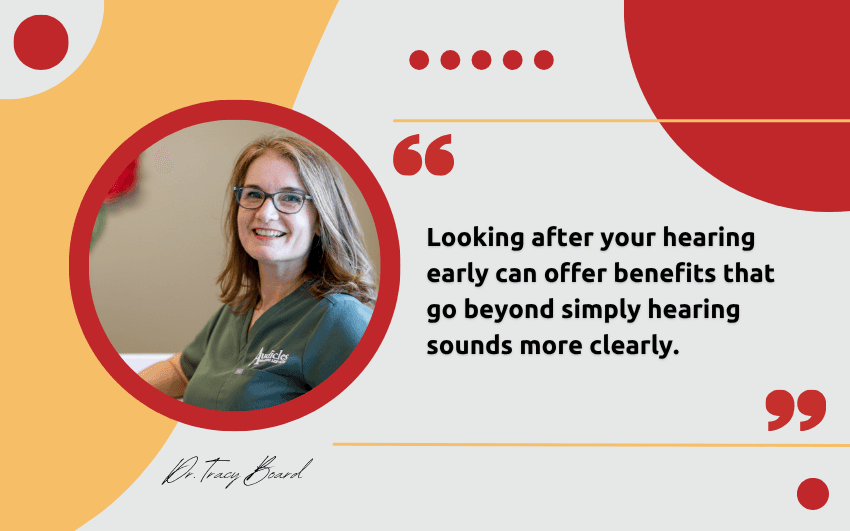
So, what can that mean for you? Looking after your hearing early can offer benefits that go beyond simply hearing sounds more clearly.
Early and consistent use of hearing aids can support your brain’s ability to understand speech and help you maintain the listening skills you rely on every day. It can also reduce the mental effort involved in following conversations, making it easier to stay connected to your work, your family, and the people and activities that matter most to you.
How to Take the First Step
A proactive hearing screening is an important first step, even if you feel your hearing is fine. Hearing loss challenges often develop so gradually that you may not realize how much your hearing has changed. You might simply get used to turning up the TV, asking people to repeat themselves, or finding conversations in busy places more tiring.
During one of our comprehensive hearing assessments, we evaluate your ability to understand speech in a range of environments, which gives us a complete picture of your auditory health. This allows our team to create a truly personalized solution that puts your long-term brain health first.
Don't wait until your brain begins to struggle. Contact our team at Audicles Hearing Services today to schedule an appointment and start your hearing health journey!